
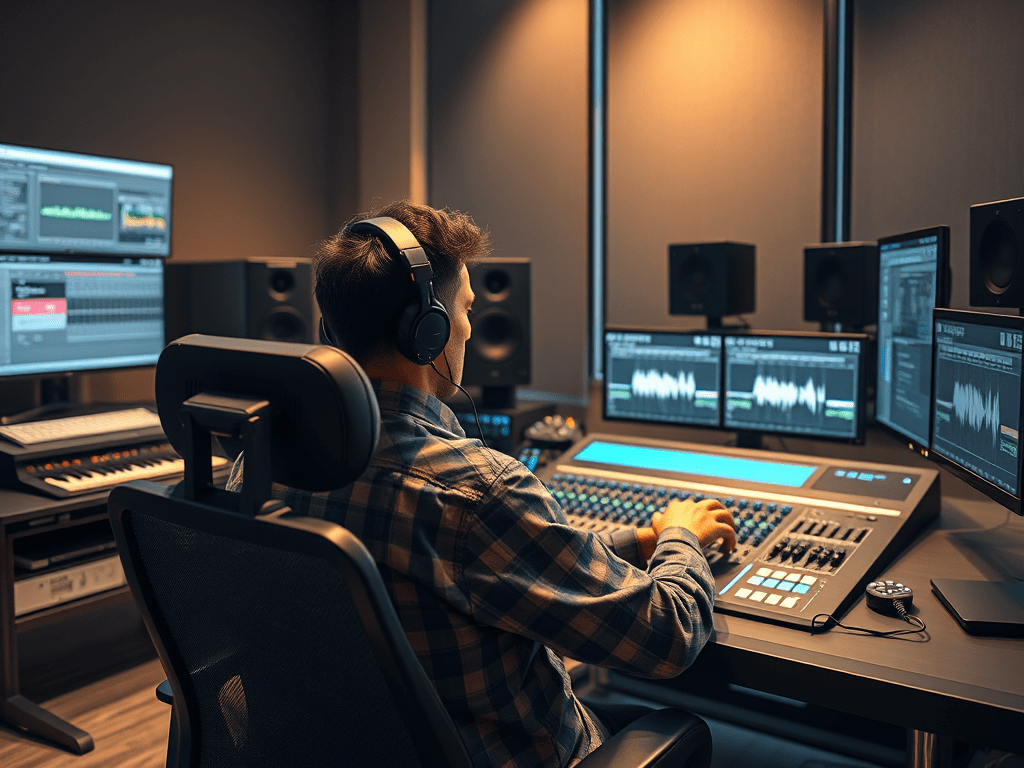
Crafting Authentic Sound for Global Audiences
As global content consumption continues to grow, the need for high-quality localization has never been greater. While much of the focus tends to fall on translated scripts and voice casting, one crucial element often overlooked is the role of re-recording mixing in the localization process. This final creative stage ensures that a film or series not only sounds natural in a new language but also preserves the emotional and technical integrity of the original production.
What is Re-Recording Mixing?
Re-recording mixing is the process of combining and balancing all the audio elements of a film — dialogue, music, and sound effects — into a final mix. In localization, this means carefully integrating new voice tracks into the existing soundtrack while respecting the original mix’s tone, dynamic range, and spatial placement.
Unlike production mixing, which happens on set, or editorial work, which prepares the audio elements, re-recording mixing shapes the final sound experience for the audience.
Why It Matters in Localization
When content is dubbed into another language, the new dialogue must be seamlessly integrated into the existing mix. This involves more than just placing a voice over a muted actor’s mouth. The re-recording mixer adjusts levels, EQ, reverb, and timing to make the new voice feel like it belongs in the same sonic environment as the original.
At the same time, mixers must respect technical specifications for deliverables, handle NTSC speed conversions when necessary, and occasionally adjust music or effects to suit cultural expectations or censorship requirements.
Common Challenges
One of the biggest challenges in localization mixing is achieving natural sync with new vocal performances while maintaining the clarity and energy of the original soundtrack. It’s also common to encounter issues with background crowd tracks (walla), ADR inconsistencies, or music stems that don’t isolate cleanly from dialogue.
Maintaining consistency in volume and tone across languages is critical, especially when a project involves multiple territories.
Tools and Techniques
Re-recording mixers rely on industry-standard tools like Pro Tools, Izotope RX for noise reduction and pitch correction, and a variety of plug-ins to handle dynamic control, reverb matching, and dialogue alignment.
Mixers must also be skilled in reading international spec sheets and preparing multiple mix versions for streaming platforms, broadcast, and theatrical releases.
Conclusion
In the world of localization, re-recording mixing plays a key role in delivering content that feels authentic and immersive, no matter the language. It’s a subtle, often invisible craft — but when done right, it allows audiences worldwide to connect with a story as if it were made just for them.
 misticwave.com
Leave a comment